


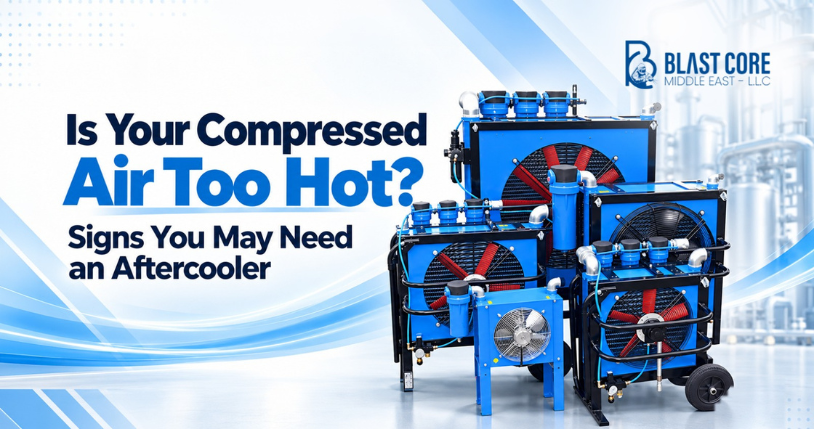
What if the heat coming from your air compressor is affecting your work more than you realise? In industrial settings, even a small change in air temperature can lead to moisture buildup, equipment issues, and delays in daily operations. These problems can be especially challenging during sandblasting and surface preparation, where consistent compressed air is essential. As hot air cools, water can collect in the system and interfere with the equipment. Recognising these signs early can help you understand when an aftercooler may be needed.
Why Does Compressed Air Become Too Hot?
When air is compressed, the pressure and temperature rise. A compressor can produce more heat the harder it operates. This is a normal aspect of compression, but the temperature must be controlled before the air reaches delicate machinery or the next phase of the process.
High compressed air temperatures can be caused by several factors:
- Heavy compressor use: Continuous operation can produce a lot of heat, especially in demanding industrial applications.
- Inadequate ventilation: A compressor placed in a location with inadequate ventilation may find it difficult to efficiently expel heat.
- High ambient temperatures: The compressor and cooling equipment may find it more challenging to maintain appropriate temperatures in hot working circumstances.
- Cooling system issues: Poor maintenance, dirty cooling surfaces, or blocked airflow can all lower cooling efficiency.
Signs Your Compressed Air Needs an Aftercooler
High compressed air temperatures can be hard to notice, but some problems may show that your system needs better cooling.
Moisture in air lines and equipment
One of the clearest warning signs is water collecting in air hoses, receivers, or blasting equipment. Hot compressed air carries water vapour. When the air cools, some of this vapour turns into liquid water. Without proper moisture removal, water can travel through the system and affect the equipment.
Inconsistent sandblasting results
Moisture can cause abrasive materials to clump together, interrupting the flow of media through the equipment for sandblasting operations. This can lead to uneven surface preparation, frequent stoppages, and extra cleaning work. An aftercooler helps reduce this risk by cooling the air and allowing condensed moisture to be separated.
Painting and coating issues
Moisture in compressed air can affect surface preparation and cause defects in painted surfaces. Cooling the air and removing condensed water helps improve coating quality and achieve better results.
Regular disruptions when operating
The air treatment setup may require maintenance if operators often stop work to drain water, clear blockages, or address moisture-related problems. These issues may raise the need for maintenance and slow down productivity.
How Does an Air Cooled Aftercooler Help?
Compressed air is cooled by passing it through a heat exchanger in an air-cooled aftercooler while surrounding air is moved across the cooling surfaces by a fan. For industrial processes, this procedure has the following advantages:
- Reduced moisture: It can be separated before condensed water reaches equipment downstream.
- Improved blasting performance: During sandblasting, drier compressed air helps avoid abrasive clumping and interruptions.
- Better equipment protection: Eliminating excess moisture helps reduce water-related issues with tools, valves, and air lines.
- More consistent work: Smoother blasting and painting procedures are supported by improved air preparation.
- Less preventable downtime: Resolving moisture-related problems can reduce disruptions caused by blockages and frequent draining.
Should You Purchase or Rent an Aftercooler?
The best option will depend on your project schedule, the size of your operation, and how frequently you utilize compressed air. Purchasing an aftercooler might be appropriate for establishments that require constant cooling as part of their daily operations. Renting can be a sensible option for short-term projects, short-term blasting work, or companies that want extra cooling capacity for a limited time.
Think about these things before deciding:
- Airflow capacity: Select equipment that is compatible with the output and operating pressure of your compressor.
- Working conditions: Consider the ambient humidity, temperature, and installation space.
- Project duration: Determine how much it will cost to buy equipment and how long you really need to rent it.
- Requirements for maintenance: Verify the availability of technical assistance, condensate drainage, and servicing.
Better Cooling for Every Project
Keeping compressed air at the right temperature can make a real difference to your daily operations. From achieving better sandblasting results to protecting equipment from moisture-related issues, proper air cooling helps your work run more smoothly. BlastCore Middle East supports industrial businesses with aftercooler solutions for different project needs.
As an air aftercooler supplier in Abu Dhabi, the company both sells aftercoolers for long-term use and offers air-cooled aftercooler rental for temporary projects. When selecting an aftercooler, consider your compressor capacity, working conditions, and cooling requirements to find the right solution for your business.